
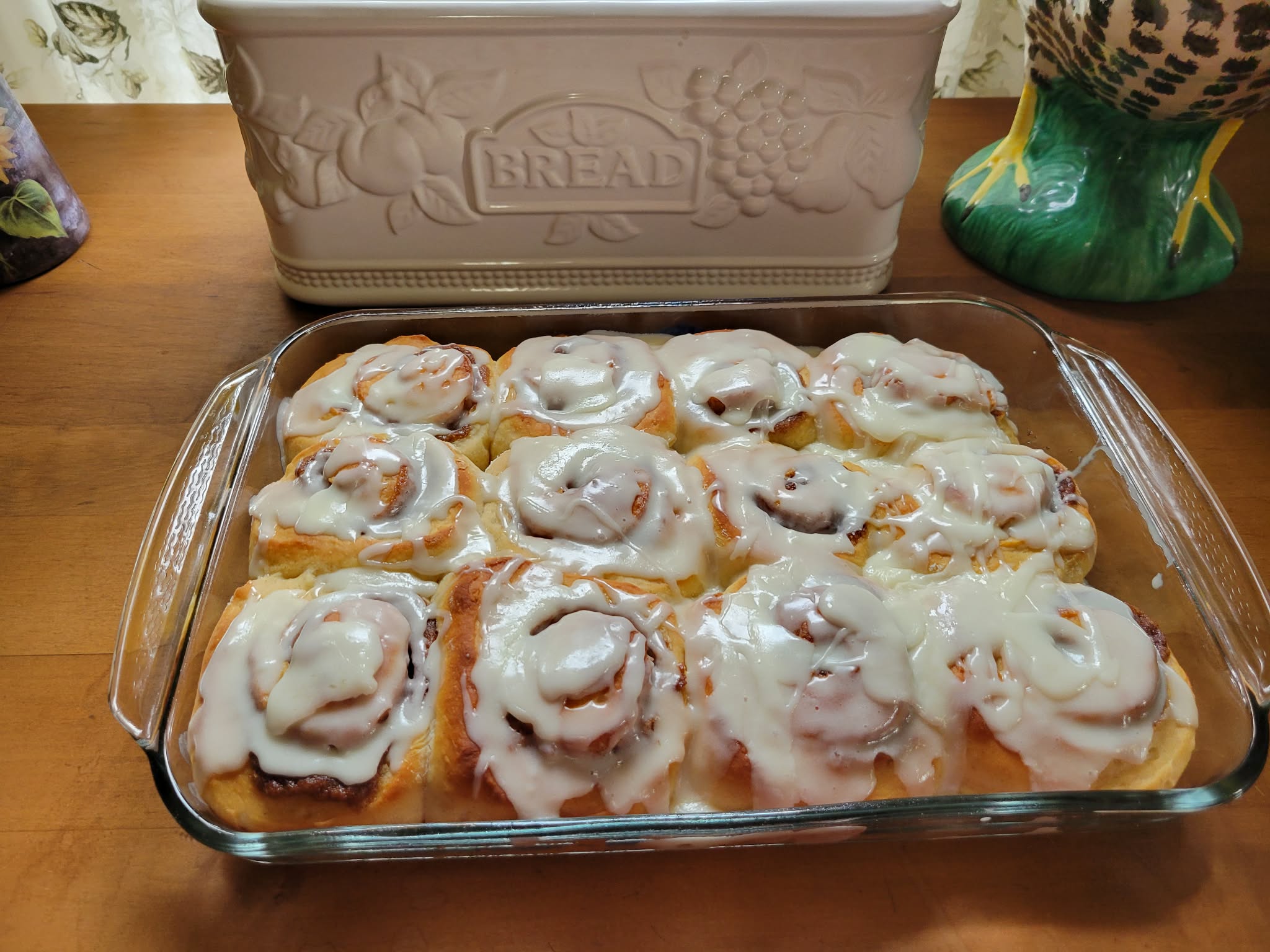
Recipes are more than instructions. They’re stories passed hand to hand.
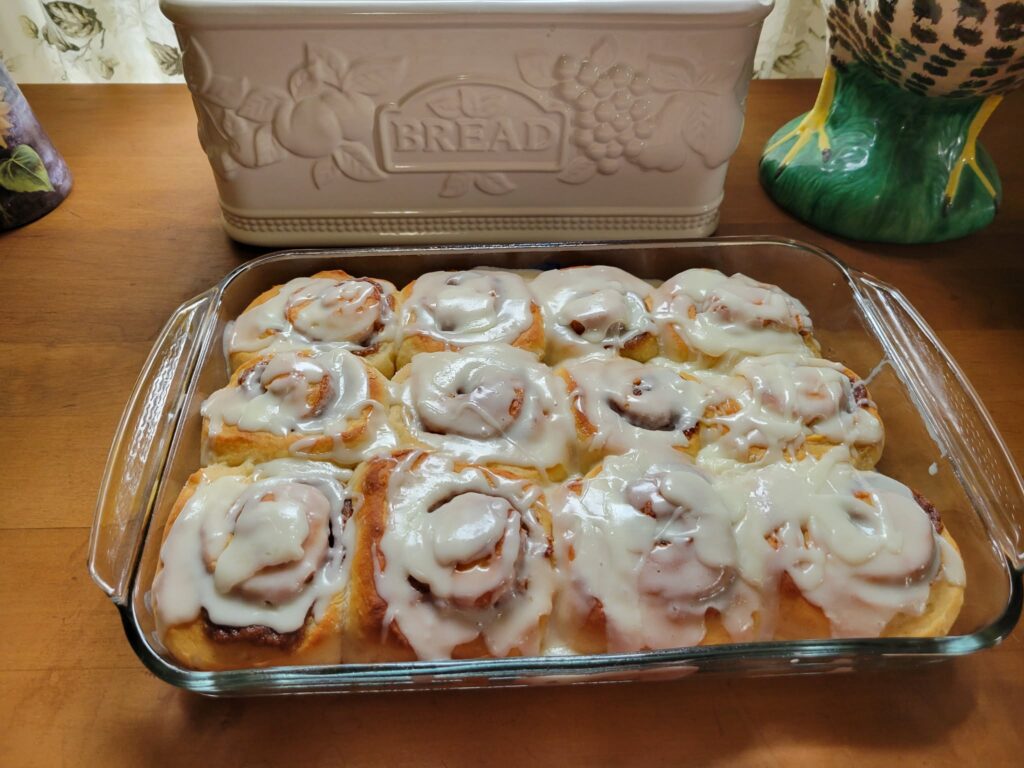
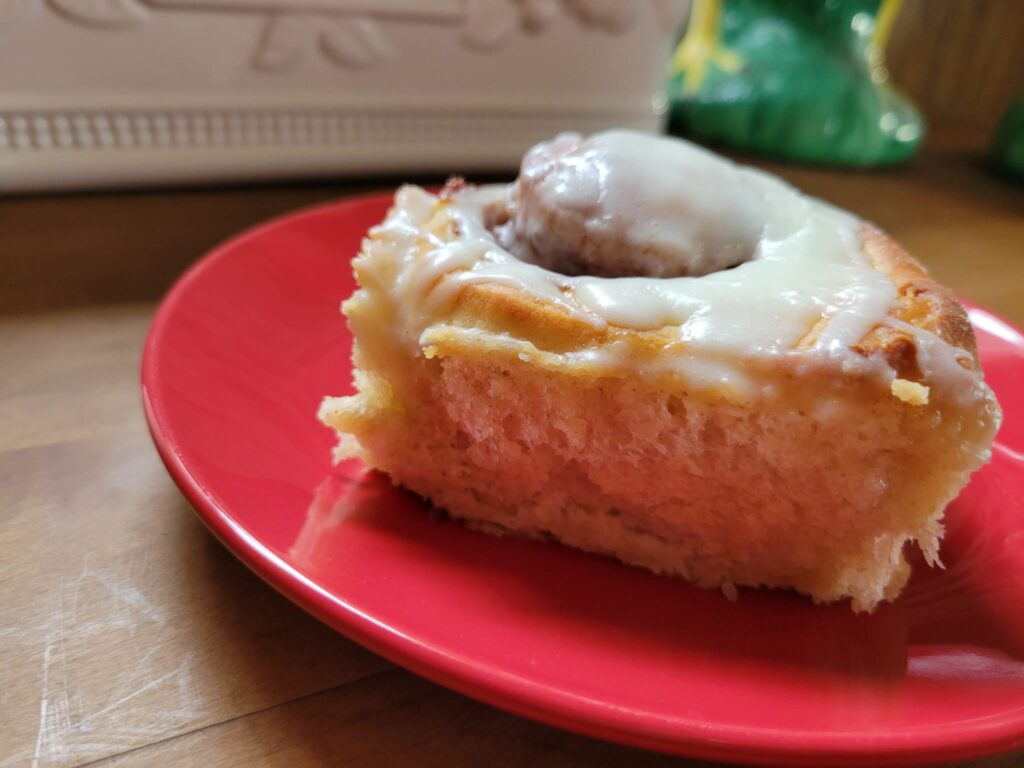
These sourdough cinnamon rolls begin with my grandmother’s starter, lovingly kept alive and shared across generations. Long before stand mixers and quick-rise yeast, there was patience, time, and the quiet faith that good things grow slowly.
The dough rests overnight, rising at its own pace, developing flavor and tenderness that can’t be rushed. The filling is simple and generous, the way she believed love should be, and the result is a pan of cinnamon rolls that feel like home the moment they come out of the oven.
Baking with this starter is a reminder that we are shaped by what came before us. What was nurtured with care can still feed us today.
This recipe is offered with gratitude, a bit of flour on the counter, and the hope that it brings warmth to your kitchen and sweetness to your table.
☕🍪✨
Ingredients
Dough
1 cup (227g) ripe (fed) sourdough starter
3/4 cup (170g) milk, lukewarm
1 large egg
4 tablespoons (57g) butter, softened
4 3/4 cups (594g) Unbleached All-Purpose Flour
1/2 cup (57g) Wheat Flour
1/4 cup (50g) granulated sugar
1 1/2 teaspoons (9g) table salt
1 teaspoon instant yeast, optional*
Filling
3/4 cup (159g) light brown sugar or dark brown sugar, packed
1/4 cup (30g) Unbleached All-Purpose Flour
1 tablespoon cinnamon
1/8 teaspoon table salt
¼ cup butter, melted
Icing
1 1/2 cups (170g) confectioners’ sugar
pinch (1/16 teaspoon) salt, optional
1 1/2 tablespoons (21g) butter
1 Tablespoon Pure Vanilla Extract
1 /4 cup heavy cream
Instructions
To make the dough: Weigh your flour; or measure it by gently spooning it into a cup, then sweeping off any excess. Mix together all the dough ingredients except the salt (and yeast) until the flour is evenly moistened and the dough has formed a cohesive, sticky mass, 2 to 3 minutes on low speed of a stand mixer. (I used a Danish Whisk and it worked fine)
Add the salt (and yeast) on top of the dough (without mixing it in), then cover and let the dough rest for 20 minutes. Mix to fully incorporated, about 1 minute on low speed. Turn the mixer up one speed and knead the dough until it’s smooth and supple though still somewhat soft and tacky, about 2 to 3 minutes.
Cover the dough and let it rest in a warm (75°F) place for 4 hours. To develop strength in the dough, stretch and fold it in the bowl three to four times during the rest. You can be fairly flexible in your timing of these. One stretch and fold per hour is ideal. The goal is to end up with a strong dough with good elasticity.
To make the filling: Meanwhile, combine all the filling ingredients in a medium bowl. The texture will be thick.
Turn the dough out onto a lightly greased or floured work surface and gently deflate it, patting or rolling it into a 14” x 20” rectangle.
Spread the filling evenly over the surface of the dough, leaving 1/2″ of exposed dough along one short edge.
Starting with the filling-coated short edge, roll the dough into a log. As you roll, the log will lengthen to around 18″.
Cut the log into twelve 1 1/2″ slices and place them in a lightly greased 9″ x 13″ pan. Cover the pan and let the rolls rise until they’re puffy, 2 to 3 hours.
At this point, you can let the rolls rise for another hour or so and then bake them; or you can place the pan in the refrigerator overnight, covered, and bake the rolls the next day (up to 24 hours later).
To bake the same day: Bake the rolls in a preheated 400°F oven for 18 to 22 minutes, until golden. A digital thermometer inserted into the center of a middle bun should read 190°F.
To make the icing: While the rolls are baking, stir together all the ingredients in a medium bowl until smooth. Remove the rolls from the oven and cool for 5 to 10 minutes before icing. Enjoy!
To bake after being refrigerated overnight: Remove the pan from the refrigerator and leave the rolls covered at room temperature while you preheat the oven to 400°F.
Bake the rolls for 20 to 25 minutes, until golden. A digital thermometer inserted into the center of a middle roll should read 190°F. Remove the rolls from the oven and cool for 5 to 10 minutes before icing and serving the sourdough cinnamon rolls.
Store any leftover rolls in an airtight container at room temperature for a day or so; freeze unfrosted rolls for longer storage.
* If you don’t want to wait for your starter to be completely ripe (or if you’d like a little added leavening insurance), add the teaspoon of optional yeast to your dough. Note that the rising/proofing times will be shorter with additional yeast, likely just 2 to 2 1/2 hours (with just two to three rounds of stretching and folding the dough) for the first rise, and 1 1/2 to 2 hours for the second.